
The No-Outage Outdoors: Why Campsites Needs Continuity Plans as Much as Companies Do

NexusTek_ESP_No-Outage_Outdoors_Blog_Main_Draft_v1.0_1225
 

Campsites and other adventure lodging getaways may promise guests a break from everyday life, but behind the tents, domes, RVs, pads, and cabins is a digital backbone that rivals any modern workplace. Reservation apps sync with CRM systems, digital waivers capture guest consent, mobile POS handles every S’mores kit and campsite upgrade, and smart cabin amenities all rely on continuous connectivity. When the Wi-Fi drops in the woods, everyone hears it—check-in lines stall, payments freeze, access controls fail, and operations grind to a halt. Now, artificial intelligence (AI) is entering the mix, powering everything from dynamic pricing and predictive maintenance to staffing optimization and guest personalization, all of it just as dependent on uptime.

At your destination, the scenery may be quiet, but the operational stakes are loud and clear. Outages in outdoor hospitality can leave guests stranded, staff scrambling, and revenue paused, making continuity planning as essential under the pines as in the boardroom.

And when systems go dark, it’s not just uptime at risk. Security exposure often follows. According to IBM’s Cost of a Data Breach Report 2025, the global average cost of a data breach in the hospitality sector rose from $3.82 million in 2024 to $4.03 million in 2025—even as several other industries saw stabilization or declines in average breach costs.¹ At the same time, connectivity expectations in the accommodation sector are unmistakably high: more than 90 percent of guests say access to a hotel’s Wi-Fi is “very important,” and 58 percent report Wi-Fi quality is “highly likely” to influence their booking decisions—tightening the link between availability, experience, and risk.²


Why Growth Brings Greater Operational Pressure

Outdoor recreation continues to surge, with the global camping and outdoor hospitality market expanding to $64.38 billion in 2025 and projected to reach $108.74 billion by 2032.³ As operators add mobile check-in, digital ID verification, online activity booking, and connected amenities, they become increasingly dependent on uptime-sensitive workflows.

Yet campsites don’t follow a standardized infrastructure model. No two properties share the same layout or network design. Operators manage safari tents, yurts, cabins, RV pads, domes, bathhouses, general stores, and remote activity stations—each with different access points, wiring, terrain constraints, and signal coverage. This structural diversity makes reliability a challenge: a single access-point failure or connectivity drop can disable mission-critical systems across an entire property.

Here are five reasons outdoor hospitality now requires formal continuity planning for the failover, resilience, and uptime protection needed to keep operations running rain or shine.

NexusTek_ESP_No-Outage_Outdoors_Blog_Image_A_Draft_v1.0_1225

Check-In Halts Fast When Connectivity Fail

Digital waivers, online ID verification, reservation lookups, and mobile check-in workflows all depend on uninterrupted connectivity. At camping resorts where arrivals peak in tight windows, even a five-minute slowdown can produce long lines and frustrated guests. When networks drop, staff often revert to manual workarounds such as paper waivers, handwritten payment logs, radio and manual reservation lookups. These stopgaps introduce errors, reduce throughput, and erode guest trust. According to Verizon’s Data Breach Investigations Report, stolen credentials, phishing, and other identity-centric cyberattack techniques are consistently among the top initial access vectors in breaches, including in cloud environments. Exploiting vulnerabilities as an entry point for data breaches increased by 34 percent, now representing 20 percent of all breaches.4

Stay connected in the great outdoors: Adopt connectivity designs with Long-Term Evolution (LTE) failover, edge caching for digital waivers and forms, and cloud-based reservation systems that continue operating in limited mode during primary outages.

NexusTek_ESP_No-Outage_Outdoors_Blog_Image_B_Draft_v1.0_1225

POS Freezes Cost Revenue—Instantly

Camp stores, rental shacks, café windows, snack bars, and mobile food carts rely on cloud-connected POS terminals. Operators increasingly depend on real-time inventory syncing, digital wristbands, and mobile-first payment methods, all of which require consistent uptime. In peak moments, even a few minutes of downtime can turn long lines into walk-aways, force staff back to manual workarounds, and create reconciliation headaches at the end of the day. Over time, small interruptions compound into lost revenue, frustrated staff, and guests who remember the hassle more than the view.

Stay connected in the great outdoors: Use POS systems with offline modes, deploy dual-WAN or LTE failover for retail zones, and segment POS traffic from guest Wi-Fi to ensure it stays prioritized.


NexusTek_ESP_No-Outage_Outdoors_Blog_Image_C_Draft_v1.0_1225

Smart Cabins Go Dark Without Resilient Networks

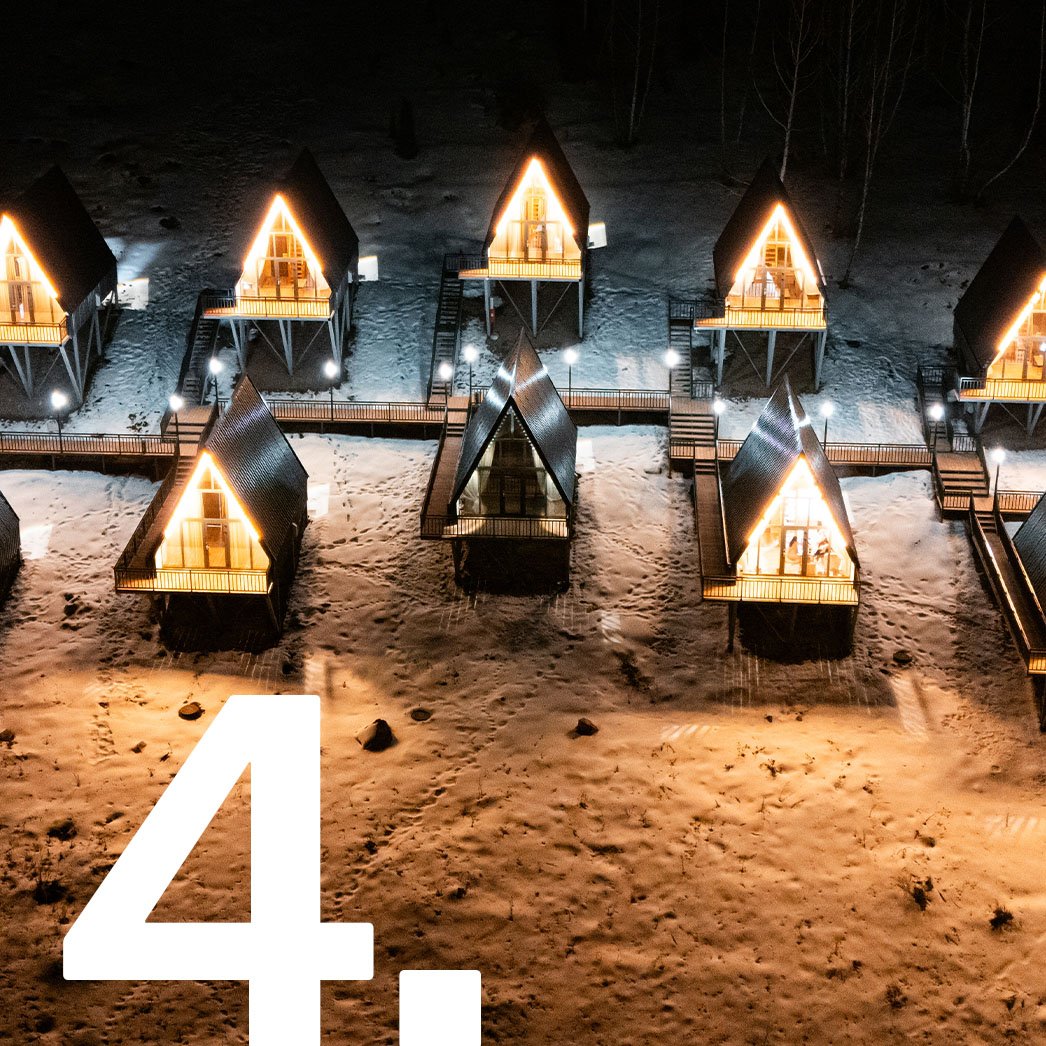
The smart hospitality market is on a rapid growth trajectory, projected to reach $74.86 billion by 2029 at a 26.1% CAGR, fueled by Internet of Things (IoT) integration, contactless technology, sustainability initiatives, automation, and predictive maintenance.5 As outdoor hospitality embraces this same wave of smart transformation, cabins are increasingly powered by digital locks, connected thermostats, occupancy sensors, and AI-enabled comfort automation, enhancing the camping and glamping resort guest experience while quietly increasing dependence on constant connectivity.

Stay connected in the great outdoors: Segment IoT from guest traffic, deploy mesh networks with self-healing capabilities, and implement real-time monitoring that alerts staff the moment cabins or clusters drop offline. 
NexusTek_ESP_No-Outage_Outdoors_Blog_Image_D_Draft_v1.0_1225

Safety Systems Need Uptime—Not Excuses

Campsites depend on more than convenience technology. Connectivity powers radios, security cameras, license-plate readers, gate access, emergency beacons, weather monitors, and guest-notification systems. An outage at the wrong moment doesn’t just slow operations. It can compromise safety, especially when campers are miles from the nearest town and relying on connectivity as a lifeline for navigation, emergency calls, and weather alerts.⁶

Stay connected in the great outdoors: Implement redundant networks for safety zones, prioritize emergency communications traffic, and use monitored backups for security systems.

NexusTek_ESP_No-Outage_Outdoors_Blog_Image_E_Draft_v1.0_1225

Staff Can’t Operate When Tools Go Offline

Maintenance systems, housekeeping assignments, activity scheduling, golf-cart routing, and incident reporting all rely on mobile devices and cloud workflows. In outdoor hospitality, staff are constantly on the move, and outages shut down half the operation instantly. Seasonal teams often rely on shared devices, creating operational friction when apps fail or sync is lost. Productivity drops, guest expectations slip, and manual workaround errors multiply.

Stay connected in the great outdoors: Equip staff with devices that support offline modes, use property-wide LTE failover, and ensure back-office systems live on resilient hybrid-cloud infrastructure.


Modern Continuity Meets Rugged Reliability with ESP, a NexusTek Company

The right technology partner delivers the resilient infrastructure that keeps campsites and adventure lodging running smoothly, even when storms roll in or the primary network drops. With ESP, a NexusTek company, behind the scenes, operators gain access to:

  • Resilient outdoor networking – Wi-Fi engineered for cabins, tents, RV pads, trails, and common areas, with coverage designed to minimize dead zones across rugged landscapes.
  • Backup connectivity for critical operations – LTE and multi-path failover that keep check-in systems, POS, locks, and guest apps online even if the primary provider goes down.
  • Hybrid and private-cloud infrastructure – Always-on hosting for reservation platforms, POS systems, access controls, and operational workflows that can’t afford downtime.
  • Smart-device and IoT stability – Support and protection for access controls, sensors, cameras, and monitors to ensure devices stay connected and fully functional.
  • 24/7 monitoring and help desk coverage – Continuous oversight using AI-assisted alerting to catch issues early and resolve them before they affect guests.
  • Continuity-focused security – Purpose-built segmentation, endpoint protection, and identity controls that safeguard guest data and operational systems during outages.

Chart Your Path to Always-On Operations

Outdoor hospitality may promise serenity, but operators can’t afford silence from their infrastructure. As campsites grow more digital, continuity planning becomes a foundational part of guest experience and operational resilience.

If you’re ready to keep your outdoor lodging environment running rain or shine, NexusTek and ESP can help you build always-on operations—even miles from the nearest tower.

Check in to learn more 

About the Author

 
Picture of Jason Pullo
 

Jason Pullo

Founder, ESP, a NexusTek company

Jason Pullo is a seasoned technology entrepreneur with a passion for transforming the hospitality industry through innovative IT solutions. As Founder and CEO of Enterprise Solutions Providers, he leads the company’s vision and growth, helping hotels navigate everything from new builds and brand transitions to large-scale renovations. Since launching the firm in 2003, Jason has played a key role in the technology strategy behind more than 1,000 hotel acquisitions. His journey began at just 18 years old as an IT manager for a trade show company, and he’s since led major projects like a multimillion-dollar hotel renovation in New York City, delivering guest-centric technology with measurable business impact.

linkedin-icon2x


Keep Operations Running—Even Off the Grid

Build resilient IT and connectivity for campsites, cabins, and adventure lodging—so outages never disrupt guests or revenue.