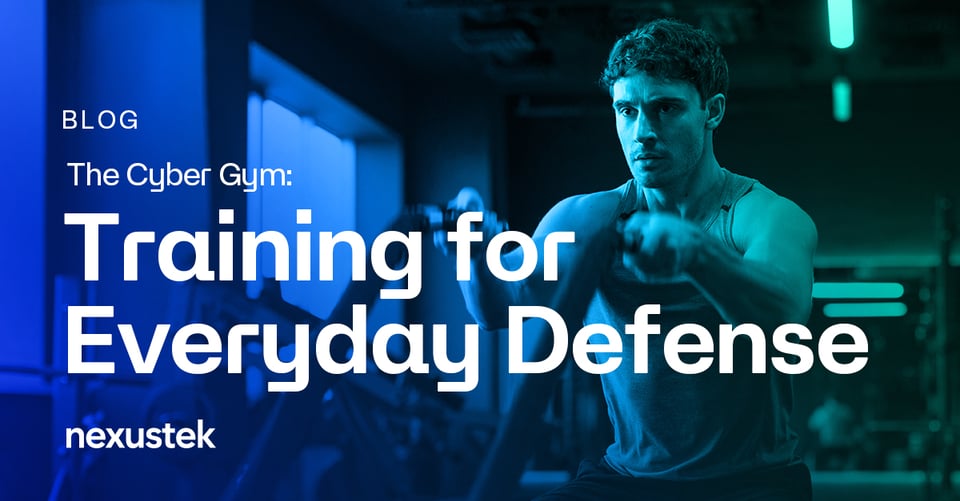
The Cyber Gym: Training for Everyday Defense

NexusTek_Cybersecurity_Awareness_Month_Cyber_Gym_Training_Blog_Main_v1.0
 

Cybersecurity awareness isn’t a once-a-year event—it’s like fitness. You don’t get strong by going to the gym once and calling it good. You build resilience by showing up consistently, building habits, and tracking progress over time. The same is true for digital safety: skipping the basics creates vulnerabilities, while steady discipline builds organizational strength.

That’s why Cybersecurity Awareness Month is the perfect reminder: real protection doesn’t come from one-off trainings or occasional campaigns. It comes from a culture of everyday defense, where people, processes, and technology all practice together. Think of it as your cyber gym—a place where organizations can train for strength, endurance, and confidence against ever-changing threats. And with the global average cost of a data breach now at $4.44 million,1 the stakes for staying in shape have never been higher. Add to that the fact that 60 percent of breaches still involve the human element,2 and the need for daily discipline becomes even clearer.

Warming Up: Start with the Basics

NexusTek_Cybersecurity_Awareness_Month_Cyber_Gym_Training_Blog_A_v1.0

Every workout begins with a warm-up, and cybersecurity is no different. Easy, repeatable actions form the foundation of defense: keeping software and systems up to date, using strong and unique passwords, and enabling automatic updates wherever possible. These simple reps build muscle memory. Over time, they become second nature, just like stretching before lifting.

Core Training: Build Strength Where It Counts

Athletes know that real strength starts at the core. In cybersecurity, that core is built through layered defenses that reinforce one another:

  • Multi-factor authentication (MFA): Adds critical protection beyond passwords.
  • Endpoint protection: Shields devices from malware and unauthorized access.
  • Regular backups: Ensure recovery is possible if ransomware or data loss strikes.

This layered “core workout” reduces risk and keeps organizations balanced, even when attackers target weak spots.

Spotters: Don’t Train Alone

NexusTek_Cybersecurity_Awareness_Month_Cyber_Gym_Training_Blog_B_v1.0

In the gym, you’d never bench-press heavy weight without a spotter. In cybersecurity, the same principle applies: no one should carry the full load of defense alone. Employees act as spotters by supporting each other and catching potential missteps before they cause harm.

  • Phishing awareness: Phishing remains the entry point for 36 percent of data.2 Training employees to recognize red flags—suspicious links, urgent requests, unusual senders—is the equivalent of spotting shaky form before injury strikes.
  • Quick reporting: Just as a spotter reacts instantly when a barbell dips, employees need to report suspicious activity immediately. A quick flag to IT can prevent a single click from becoming a widespread compromise.
  • Culture of responsibility: Spotting isn’t just for the strong. It’s for everyone in the gym. Fostering a culture where employees feel empowered to speak up ensures that no one trains in isolation, and that everyone contributes to a stronger defense posture.

When organizations build a “team sport” mentality around cybersecurity, they avoid the equivalent of a dropped barbell—incidents that could cause lasting damage.

Performance Tracking: Measure What Matters

NexusTek_Cybersecurity_Awareness_Month_Cyber_Gym_Training_Blog_C_v1.0

No fitness program works without accountability, and cybersecurity is no exception. You can’t improve what you don’t measure. Tracking key metrics provides the benchmarks that reveal progress over time and highlight areas for improvement:

  • Patch velocity: How quickly are vulnerabilities being closed after discovery? Delays give attackers a window of opportunity; faster patch cycles close that gap.
  • Phishing test results: Measuring click-through rates on simulated phishing emails identifies where employees need more training, just as a fitness test shows where stamina lags.
  • MFA adoption: Is it universal across the organization, or are there still “weak links” exposed? Just like a skipped workout, skipped protections leave vulnerabilities.
  • AI governance: With 63 percent of organizations lacking clear AI governance policies, measuring adoption and oversight is critical to ensure responsible, effective use of AI in security.3
  • Incident response time: Organizations using AI and automation extensively shortened breach lifecycles by 80 days and reduced breach costs by $1.9 million compared to those without. Performance isn’t just about speed. It’s about saving money and minimizing damage.4

With the right metrics in place, leaders can see whether their organization is progressing, plateauing, or backsliding, and adjust the workout accordingly.

The Cybersecurity Fitness Challenge

NexusTek_Cybersecurity_Awareness_Month_Cyber_Gym_Training_Blog_D_v1.0

Cybersecurity Awareness Month is like a New Year’s resolution for digital resilience—but with the right program, habits can stick long after October ends. Get started with your own four-week cyber gym plan to help your team build stronger, more consistent security practices.

Week 1: Warm-Up Drills

  • Update all devices and software to the latest versions
  • Turn on automatic updates wherever possible
  • Reset weak or reused passwords and replace them with strong, unique ones

Week 2: Core Strength

  • Enable multi-factor authentication (MFA) on every account that supports it
  • Review backup procedures and test data recovery
  • Install or update endpoint protection across all devices

Week 3: Spotter Awareness

  • Run a phishing simulation exercise to test employee awareness
  • Host a short refresher session on identifying suspicious emails and links
  • Encourage employees to report at least one “practice” suspicious email

Week 4: Performance Tracking

  • Audit patching practices: how quickly are vulnerabilities closed?
  • Review MFA adoption metrics—close any remaining gaps
  • Assess phishing simulation results and schedule follow-up training if needed

Cybersecurity isn’t about quick wins; it’s about steady progress. By working through these small, structured steps, your team can strengthen its defenses and build lasting resilience. And if you’d like extra guidance, NexusTek is here to help, whether that’s through assessments, awareness training, or building a roadmap for long-term protection.


Stronger Every Day

Cybersecurity isn’t about perfection or a single “big win.” It’s about discipline, repetition, and building resilience day after day. Organizations that treat security like fitness—consistent, intentional, and measurable—are the ones that grow stronger, faster, and more agile in the face of threats. With the right habits, the right support, and the right accountability, every organization can build the strength it needs to protect what matters most.

Reach out to the NexusTek team to learn how we can help you put these practices into action and keep your business stronger every day.
Ready to Build Stronger Cyber Defenses?

Just like fitness, cybersecurity strength comes from consistent training and the right support. NexusTek’s Security Awareness Training helps your team stay alert, resilient, and ready for whatever comes next.